





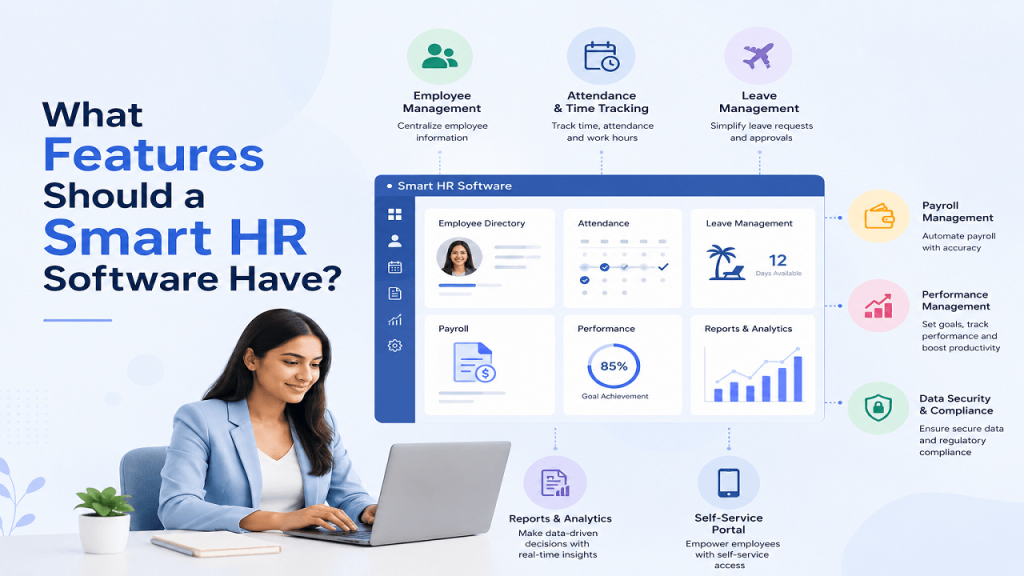
Businesses rarely start looking for HR software because they want new technology. They look for it when everyday HR work starts getting messy. Attendance becomes inconsistent, leave approvals slow down, payroll turns stressful, and employee data gets lost across spreadsheets, emails, and different software.
A smart HR software solution fixes this by bringing everything into one place. It automates routine tasks, improves accuracy, and provides real-time visibility, enabling HR teams to work faster and with fewer mistakes.
Today’s HR platforms go beyond recordkeeping. Features like AI-based attendance, automated payroll, workforce analytics, mobile access, and smart reporting are now standard expectations.
For companies exploring HR Software in Bangladesh, choosing the right system means better control, smoother operations, and long-term scalability.
Core HR Management Features
At the heart of every smart HR platform is the ability to efficiently manage employee information. These features create a strong foundation for all other HR activities, including attendance, payroll, reporting, and workforce planning. Without a well-structured HR management system, even advanced automation features can become difficult to use effectively.
Centralized Employee Database
A centralized employee database acts as the single source of truth for the organization. It ensures all employee information is organized in one place rather than scattered across multiple files or systems.
The system should maintain:
- Employee personal information
- Employment history
- Department and designation records
- Salary information
- Reporting hierarchy
- Contract details
- Emergency contacts
- Digital documents
Employee Self-Service Portal
Employees increasingly expect direct access to their own information without depending on HR for small tasks. A self-service portal gives them control over routine HR activities in a simple and structured way.
A modern self-service portal should allow employees to:
- View attendance records
- Check leave balances
- Apply for leave
- Download payslips
- Update personal information
- Track approval requests
Manager Self-Service Dashboard
Managers often need quick access to team information to make informed, timely decisions. Without a proper dashboard, they usually depend on HR reports, which can slow down the process.
A manager dashboard should provide access to:
- Team attendance data
- Leave approvals
- Team performance information
- Employee records
- Department reports
Employee Onboarding Automation
The onboarding process plays an important role in shaping a new employee’s first experience with the company. A structured and automated system ensures consistency and reduces manual work for HR teams.
Smart onboarding features may include:
- Digital joining forms
- Automated document collection
- Policy acknowledgment workflows
- Welcome to task assignments
- New employee checklists
Document Management System
Many organizations still struggle with scattered files and unorganized document storage. A proper document management system brings everything into a single secure platform.
A smart HR platform should provide:
- Secure document storage
- Digital contracts
- Employee certificates
- Performance documents
- Policy documents
- Audit-ready file management
Attendance and Workforce Management Features
Attendance management is no longer limited to tracking employee entry and exit times. Modern organizations require intelligent workforce-monitoring software that supports diverse work environments, multiple shifts, remote employees, and flexible attendance policies.
AI-Based Attendance Management
Artificial intelligence is transforming how attendance is tracked and verified. It makes the entire process more accurate, automated, and less dependent on manual input. This reduces errors and improves overall attendance reliability.
Modern AI attendance systems can support:
- Facial recognition
- Attendance anomaly detection
- Geolocation verification
- Geofencing
- Biometric integration
- Automated attendance validation
Real-Time Attendance Tracking
Managers should not have to wait until the end of the month to understand attendance trends. Real-time tracking gives instant visibility into workforce activity throughout the day.
Real-time monitoring enables:
- Live attendance visibility
- Late arrival alerts
- Absence notifications
- Workforce availability tracking
- Shift attendance monitoring
Shift Management
Organizations operating multiple shifts require proper scheduling systems to maintain smooth operations. Without structured shift planning, confusion and scheduling conflicts can easily occur.
Important shift management features include:
- Fixed shifts
- Rotational shifts
- Night shifts
- Flexible schedules
- Shift swapping
- Automated shift assignments
Overtime Management
Manual overtime calculation often leads to errors and payroll disputes between employees and HR teams. A smart system helps automate this process and makes it more transparent.
Smart HR software should support:
- Automatic overtime calculations
- Overtime approval workflows
- Policy-based overtime rules
- Overtime reporting
- Payroll integration
Workforce Scheduling
Workforce scheduling software helps organizations assign employees more efficiently and in a more structured way. It ensures the right people are available at the right time based on business needs.
Useful features include:
- Schedule planning
- Resource allocation
- Team availability tracking
- Workload balancing
- Shift forecasting
Payroll and Financial Management Features
Payroll is one of the most sensitive business processes. Even small errors can impact employee trust and create administrative challenges. Smart Payroll software should automate payroll processes while maintaining complete accuracy and transparency.
Payroll Automation
A robust payroll software should handle all salary-related processes in a structured, automated manner. This reduces manual calculation work and ensures payroll is processed accurately every month.
It includes:
- Salary calculations
- Bonus processing
- Overtime payments
- Tax deductions
- Loan adjustments
- Arrear management
- Final settlements
Attendance-to-Payroll Integration
One of the most important features of smart HR software is seamless integration between attendance and payroll. This ensures that all attendance-related data is directly reflected in salary calculations without manual intervention.
The system should automatically transfer:
- Attendance records
- Leave data
- Overtime hours
- Shift allowances
- Payroll deductions
Tax and Compliance Management
Payroll compliance is essential for smooth business operations and legal accuracy. A smart system helps organizations manage all tax-related processes in a structured, error-free manner.
A smart solution should help manage:
- Tax calculations
- Compliance records
- Employee deductions
- Regulatory reporting
- Audit preparation
Compensation and Benefits Management
Organizations need clear visibility into employee compensation to maintain fairness and consistency. A structured system helps manage all salary-related components in one place.
Useful capabilities include:
- Salary structure management
- Benefit tracking
- Allowance management
- Incentive programs
- Compensation reporting
Recruitment and Employee Development Features
Smart HR software should support employees throughout their entire lifecycle, from hiring to development and retention. These features help businesses attract talent, improve performance, and build a stronger workforce.
Recruitment and Applicant Tracking System (ATS)
Hiring becomes significantly easier when recruitment is managed through a structured and centralized system. It helps HR teams organize every stage of the hiring process more efficiently and transparently.
Key ATS features include:
- Job posting management
- Candidate tracking
- Resume database
- Interview scheduling
- Recruitment workflows
- Hiring analytics
Performance Management System
Performance management helps align employee activities with overall business goals. It ensures that employee progress is tracked in a structured way throughout the year.
Important features include:
- Goal setting
- KPI tracking
- Performance reviews
- Continuous feedback
- Performance analytics
Learning and Development Management
Employee development plays a key role in long-term business growth and sustainability. A structured learning system ensures employees continuously improve their skills.
The training management module should support:
- Course management
- Certification tracking
- Learning progress monitoring
- Skills assessment
- Training effectiveness reporting
Employee Engagement Module
Employee engagement directly affects productivity, satisfaction, and retention. A strong engagement system helps organizations maintain a healthy workplace environment.
Smart engagement features may include:
- Employee surveys
- Feedback systems
- Recognition programs
- Internal communication tools
- Pulse surveys
Reporting, Analytics, and Business Intelligence Features
Data-driven HR is becoming a competitive advantage. Smart HRIS software in Bangladesh should convert workforce data into actionable insights to support better decision-making.
Workforce Analytics Dashboard
A workforce analytics dashboard provides a clear overview of organizational HR performance. It helps leadership quickly understand key workforce metrics.
It provides:
- Headcount analysis
- Employee turnover trends
- Attendance analytics
- Leave trends
- Payroll insights
- Workforce cost reporting
Custom Reporting
Every organization has different reporting needs depending on its structure and operations. A flexible reporting system allows complete customization based on requirements.
The software should allow users to generate:
- Attendance reports
- Payroll reports
- Employee reports
- Department reports
- Compliance reports
- Executive summaries
AI-Powered Workforce Intelligence
AI is increasingly being used to analyze workforce behavior and predict future trends. This helps organizations move from reactive to proactive HR management.
Capabilities may include:
- Attrition prediction
- Attendance pattern analysis
- Productivity insights
- Workforce forecasting
- HR trend identification
Technology and Security Features
Modern HR systems must be both powerful and secure to effectively handle sensitive employee data.
Cloud-Based Infrastructure
Cloud systems provide flexibility and scalability for growing organizations. They ensure HR data can be accessed securely from anywhere.
Cloud technology offers:
- Anywhere access
- Automatic updates
- Data backup
- Scalability
- Reduced IT costs
Mobile Accessibility
Mobile access is now essential for both employees and managers. It allows HR tasks to be completed anytime without being tied to a desktop system.
A mobile HR application should support:
- Attendance marking
- Leave requests
- Approvals
- Payslip access
- Notifications
- Employee directory access
Advanced Security and Role-Based Access
HR systems store highly sensitive employee data, so strong security controls are essential. Role-based access controls ensure that only authorized users can view specific information.
Important security features include:
- Role-based permissions
- Multi-factor authentication
- Data encryption
- Audit logs
- Activity tracking
- Secure backups
Multi-Branch and Multi-Location Support
As organizations grow, they often operate across multiple locations or branches. HR systems must support this complexity without losing control or accuracy.
- Smart HRIS software should support:
- Branch-wise attendance
- Location-specific payroll
- Department segmentation
- Multi-office reporting
- Workforce distribution tracking
Final Verdict
Smart HR software should be more than a digital filing cabinet. It should serve as a central platform that connects employee records, attendance, payroll, recruitment, performance management, analytics, and compliance within a single ecosystem.
Businesses evaluating HR Software in Bangladesh should prioritize solutions that offer AI-based attendance management, payroll automation, workforce analytics, cloud accessibility, employee self-service, and real-time reporting. The right combination of features can help organizations save time, improve accuracy, strengthen compliance, and create a more productive workforce.




More Stories
Why Metal Recycling Matters for a Cleaner Future
MacBook Air for Freelancers: Everything You Need to Know
Loka.co.id and the Standardization of “How-To” Content in the Digital Era